Friday, December 14, 2012

Guest Post: Edith Maxwell, on Learning to Write


Today my guest is Edith Maxwell. I've known Edith the early 1990s when she joined a writers' group in my home. I loved learning about her varied interests, and now I get to read about some of them in her novels. Her first book appeared this year, and brings together several of her interests.

___________________

I’m so pleased to be a guest on Susan’s blog today.
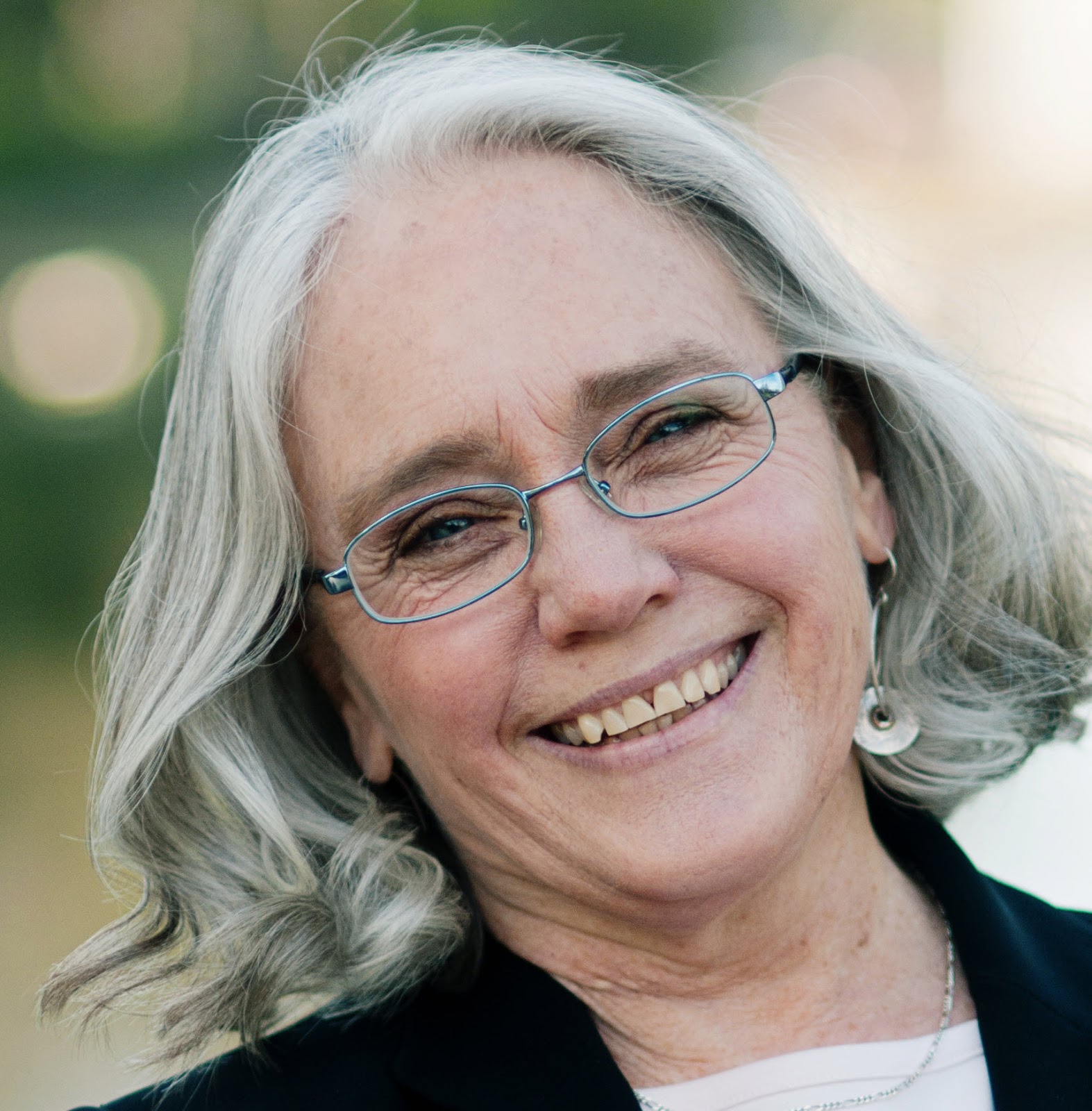
 
I just spent three days alone on Cape Cod on a solo writing retreat, and am extremely happy to report that I cranked out more than 15,000 words on my work-in-progress, the second book in my Local Foods Mystery series. This is the fourth book of mystery fiction I have written. It’s getting easier, but that doesn’t mean it’s easy. But I do like to think that my writing gets better with each book, and I wanted to share the story of when I started writing book-length fiction.

Almost twenty years ago my younger son went off to kindergarten. I was home with my boys at the time, running a small organic farm, teaching independent prepared childbirth classes, and doing some free-lance editing. For the first time since my older son was born, I had every morning to myself.

I loved reading traditional mysteries and spent many happy hours with Sue Grafton, Susan Wittig Albert, Katherine Hall Page, Sara Paretsky, and more. So I decided to see if I could write one myself. I knew the world of farming very well by then and created a geek -turned-organic farmer named Cameron Flaherty. She found a body in her hoophouse and we went from there.

Let me clarify right now that I had never studied creative writing. I’d been writing since I was a child but had NO formal instruction in writing fiction. I didn’t know anything about point of view, avoiding adverbs, writing suspense, bringing setting and environment in as an intimate part of the story. Nothing, even though I had a PhD in linguistics and had written news stories, academic articles, fun essays.

After a few months, my neighbor across the street, also a budding writer, suggested in casual conversation that I might benefit from attending a writing class that several of her friends were part of. This was the group that Susan still conducts in her home all these years later.

I contacted Susan and submitted a couple of creative non-fiction essays I had written for a local paper. I guess they were good enough for me to make the cut. I started riding down to Beverly with others in the group every Wednesday evening to read scenes to the class.

Man, did I learn fast how much I had to learn! I basically rewrote everything I had written up to that point, which was about 70 pages. And then I went from there. We followed each others’ progress and offered critiques. I learned not only how to write better, bit by bit, but also how to offer constructive criticism. And I especially looked forward to those moments when Susan would say, “Now that’s very nice.” Those comments weren’t thrown out with abandon—you had to earn them.

I didn’t quite finish the book before the farming season started up again. Since that time I have resumed a regular day job, gotten divorced, discovered Sisters in Crime, had several short stories published, and taken my share of writing workshops. I have one book out (Speaking of Murder, under the pen name Tace Baker) and a three-book contract for that very same organic farming story I started so long ago, although I rerewrote it all from scratch, retaining only the world I had created and adding a Locavore Club.

I owe so much to Susan and her expert and gentle teaching. I’m really pleased to see the success of her Anita Ray series as well as the publication of another Joe Silva book, a series I still think is one of the best I have read. Thanks, Susan!
__________________


Tace Baker, the pen name of author Edith Maxwell, is the author of Speaking of Murder (Barking Rain Press) featuring Quaker linguistics professor Lauren Rousseau. Edith holds a PhD in linguistics and is a member of Amesbury Monthly Meeting of Friends. 

Edith also writes the Local Foods Mysteries.  A Tine to Live, a Tine to Die introduces organic farmer Cam Flaherty and a Locavore Club (Kensington Publishing, May 2013). 

A mother and technical writer, Edith is a fourth-generation Californian but lives north of Boston in an antique house with her beau and three cats.


Sunday, December 2, 2012

A Quantum Leap

On Saturday afternoon, yesterday, I moderated a panel on self-publishing. This is no longer quite the novel topic it once was. About five or six years ago I moderated a panel on publishing that morphed into one about self-publishing because one of the writers had done both commercial and self-publishing. We had about ten people in the audience. Two and a half years ago we put together a panel on self-publishing and drew about fifteen people. Those in the audience asked a lot of questions and the discussion was mild and easy going. Fast forward to yesterday.

Yesterday six writers showed up for their panel, and we waited for everyone to get settled. By the time we began--I was moderating--over 40 people were in the audience. That number grew to over 60 people. What happened in the last two and a half years? The word  about self-publishing spread and people began to understand what was possible. So many companies have jumped into this world with various levels of service that it would be hard for anyone not to find a resource for publishing their own work--in paper, in audio, in eBook format.

The writers on the panel had a wide range of experiences and were willing to share generously. They talked about their first efforts, and the high costs of not knowing the "system," and then talked about their most recent efforts and the almost nonexistent costs after learning how to do much by themselves. Another talked about the doors that opened to advocate for important causes, and another talked about the opportunity to put a personal experience into print. One writer wowed the audience with her own success--30,000 copies of one title sold in the last year (and her new car, paid for with cash). Another talked about her several books that reflected a life of both tragedy and triumph in working for justice for others. The last panelist described a new profession that allows him to work at home on others' writing projects while creating his own books. The panelists were varied and interesting and enthusiastic and generous.

There were so many questions from the audience that I, as moderator, could not keep up. Every time one question was answered, another ten hands went up. We could have stayed there for another four hours answering questions. People came with lists of questions about the process in general and their own works in particular; some came with their own self-published books and suggestions about what companies to work with. Most people were clear about learning quickly from any missteps and moving on to the next project.

When asked about the advantages, every writer--on the panel or in the audience--echoed the idea of control and time. Writers wanted to control their own work and they didn't want to wait months and years to see a book make it into print.

No one said he or she wouldn't do it again, and no one discouraged anyone else from giving it a try. We talked about the challenges in publishing something without assistance such as proofreading, publishing color drawings with text, copyright, business choices such as iUniverse or CreateSpace, POD and eBook formats. It was one of the most stimulating and hands-on panels I have ever participated in.

The big question for some of us was, how did so many people who were interested in this new world of publishing find out about the panel? The panelists did their job before Saturday. Every one of them posted the announcement somewhere--Facebook, a local website (Good Morning Gloucester), blogs; and it was twice in our local newspaper.

Yes, it is indeed a new world. And, to my surprise, I'm not the last one to enter it. Last month (which was only last week) I posted my new Mellinghan/Joe Silva mystery for Kindle. Last Call for Justice is on sale now.

The panelists are a group of Cape Ann writers and I hope you'll take the time to look at their work. You have lots of good reading ahead of you if you do.

Margery Leach
E.J. Lefavour
Thomas Hauck
David Simmons
Kathleen Valentine
Susan Wadia-Ellis

Thursday, November 29, 2012

At the Crossroads

Anyone who has been published by a traditional publishing house may feel ambivalent about leaving that world and moving into the self-publishing world. We think we're giving up a lot of commercial support, along with the prestige of having a publisher invest their money in our work. But the world of the writer is pretty confused right now, and it's hard to see the future.

I've had six novels and one nonfiction book published by traditional publishers as well as numerous articles and short stories, but I've also written some books that no one is interested in despite agents' best efforts. So what do I do with them? In past decades the writer would have put them back on the shelf (and it was indeed a shelf, long before computers) and moved on to the next writing project. But today we can do something about all those manuscripts languishing unread. We can send them out into the world on our own. We can be our own publishers. We don't have to get permission or approval from anyone else. This may not be a good thing (every writer has been spared embarrassment by a careful editor) but it is now the reality.

On Saturday afternoon, December 1, I'm going to facilitate an afternoon discussion about self-publishing with six writers, some of whom have been wildly successful. Many writers are happy with the attention of a small publisher who promises to sell two thousand copies. How would you feel about a writer who sells that many books in a month on her own? I'm going to find out on Saturday.

This is also an unplanned opportunity for me to announce that I too have taken the plunge. On this past weekend I posted my sixth Joe Silva as an eBook, a book that I never expected to do anything with when I began writing a mystery series set in India. I've published two books featuring Anita Ray, but I haven't forgotten Joe.

The sixth Joe Silva was hard to put aside because I finally take Joe (and Gwen) to visit his family. During a family reunion his ailing and aged father has put together, Joe comes face to face with an unrecognized crime from his younger days, and a new crime triggered by that confrontation.

I've learned how to post the mss, how to get a good cover (buy it from a good designer), and now I'm going to learn how to promote and sell the book.

And yes, I'm planning on taking notes and will share them.


Saturday, November 24, 2012

A Holiday Rest

This is the time of year when all of us are supposed to be stretched to the max, worn to a frazzle, fried, tired to a farethewell. You can add your favorite cliche here because being tired out during the holiday season is itself a cliche. As a writer I work hard to avoid cliches, and I'm working hard to avoid this one.

I sent off a mss to an editor a couple of weeks ago, and now all I can do is wait. All writers go through this, and hard as it is, it is also a great opportunity. This is the time when we are free to daydream all the time, when we begin work on our next project, long or short, fiction or nonfiction. For me that project is another novel but I'm also using the rest period to participate in a holiday art exhibit with the Rocky Neck Art Colony. This is such a great change of pace for me that I have come to treasure the time when I can look at the topics that interest me--India, people, streetscapes--with an entirely different perspective.

The Winter Show 2012 will also include a number of opportunities for artists and others to get together and talk about their work, among many topics, and enjoy the season. The show is being held at the Cultural Center on Wonson Street, Gloucester. If you're in the area, drop by and let all those cliches about the holiday season fade away.

Sunday, September 23, 2012

Why I Love September


A friend of mine has been teaching at various colleges ever since she received her graduate degree. When we talk about other careers we might have tried instead of teaching (for her) and freelance writing and editing (for me), she invariably remarks that she would find it hard to give up her summer months for a twelve-month-a-year job. I understand but I never think about those summer months. Still, I realized recently (actually Labor Day weekend), that I still think the year begins with the day after Labor Day. That was when school started (back in the dark ages), and the two or three weeks just preceding Labor Day included a lot of preparation for the change in activity.

I still think that way. This is fitting. September is, after all, National Preparedness Month. (I'll bet you didn't know that.) While others may start thinking about their New Year's Resolutions right after Christmas, I am blessedly free of that impulse.

September is when I consider what I want to accomplish during the coming months and get my plan under way. I clean out closets, go through stacks of book, find more things to set aside for the local charity thrift shop, and in general act like a big change is coming.

This year, in addition to tidying up the closets, I have tidied up my blog, attaching it more or less tightly to my web page. My web maven, a wonderful writer as well as the only woman I know who understands my computer blind spots, Kathleen Valentine, did the job, and I now feel very organized. It won't last but for the moment it feels good.

I've made a list of stories to finish and novel ideas I want to flesh out; I hope to begin one of them soon, when I get my current project into the mail.  Part of this planning comes out of my love of lists--things to do, books to read, little tasks to complete. Crossing things off those lists makes me feel enormously satisfied. And since these lists only contain things I want to do, I never experience wholesale failure, which is usually the case with New Year's Eve resolutions. For me, September is definitely a time of new beginnings.

Sunday, September 16, 2012

Never Too Old for Surprises


Saturday, September 15, 2012

By the time you reach your fifties and sixties you think you know yourself pretty well. You've been through the crises of growing up, starting a life, managing a career, getting along with friends and family and co-workers. You've survived a few tragedies and disappointments, and learned to live life day by day. You think you know how you'll react when the end point comes. I cared for my mother and younger brother. I thought I knew how to listen to the patient, and how I felt about end of life care. I was wrong.

Two or three months ago our dog, a shelter Lab mix, started losing weight. He'd been my mother's dog, and we brought him home to live with us after she died. The cat refused to have anything to do with him, but he settled in. He never had any medical issues until this spring and summer, when he started losing weight and developed diarrhea.

Right now I have a kitchen table cluttered with pill vials--red, blue, green plastic bottles, a plastic bag with packets of powders, and a box of capsules (this doesn't include the other pills we returned for a different dose), and cans of special diet food--none of which we could get down him for more than a few days at a time. He's had an ultrasound, an internal exam, an x-ray, and numerous visits to the vet. He would have started on homeopathic treatments this week if his body hadn't made it clear that no more effort should be made. He can't get to his feet on his own, can't eat, and can barely drink water. His body has stopped shedding--gone are the clumps of black hair I find whenever I vacuum. He also smells different.

As I look back I'm surprised how many times I was willing to try just one more visit, one more possible treatment, one more test. The ultrasound terrified Rob, and why not? He was held down on a table while a stranger shaved part of his body and then ran a cold piece of metal and plastic over his bare skin. He had an x-ray. Both tests showed exactly nothing. He had no tumors, no noticeable cancer, no unexpected growths or decay. He had arthritis in his spine and hips, but we already knew that.

Rob is going to the vet's this afternoon for the last time. And I am going to spend the rest of the weekend (and longer) wondering what is it about a pet that pushed me to try three doctors and scads of medicine when it was obvious where the dog was headed. I wonder if it's because he can't speak. He can't tell me where he thinks he's going (and sometimes as I watch him standing on the sidewalk, I'm not sure he has any idea where he's going or wants to go). I wonder if it's because he seems so helpless that I'm driven to help more. We had no diagnosis because we didn't know what was happening to him; the various tests turned up nothing. The observation that he's old (13) and his body has decided it's time to quit is too simple and too non-medical. What was the trigger that told his body to quit?

Two or three weeks ago I sat on the floor beside him and was surprised to find myself starting to cry. Even if I couldn't admit it to myself, I knew.

It rained this morning when we got him outside for a short walk, but that didn't seem to bother him. Usually he dislikes the rain. He also dislikes the ocean, which is odd for a water dog. He wandered along his usual route, seemed to forget where he was going, turned around, wandered some more, which is when we brought him home. He's ready, and he's probably been ready for weeks.

Pets teach us many things--unconditional love is the one people usually cite. But Rob taught me something about myself. He didn't want treatment, and I had trouble catching on to that. He only wanted to lie on the grass in the backyard and watch the squirrels and rabbits and birds pass by. That's another lesson to remember.

Sunday, September 9, 2012

Naming Your Characters


Starting out on a new novel or short story is exciting for me, with that sense of promise of interesting events and discoveries about characters. The first character, usually the mover of the story, appears well developed and named. I may not know this character well, but I can already see a form and personality. And, most important for this discussion, I don't have to work at choosing a name. Finding names for other characters is much harder.

Characters are not all the same, and their names shouldn't be either. I keep a list of characters as they appear and are named, to avoid basic pitfalls. First, I don't want all or many of the names beginning with the same letter. I did this in one mss and it lent a certain poetic quality to the story--that annoying dum de dum de dum de dum. Keeping a list of names prevent me from ending up with a list of characters like this: Paul, Pam, Priscilla, Peter. Second, the names shouldn't be too similar. It's confusing, for example, to read about Sandy talking to Randy about Mandy.

Third, the names of characters should reflect the culture of the story as well as the real world. If the story I'm working on, for instance, is set in South Philadelphia, or Boston's North End, the reader should encounter a lot of Italian names at least for the background characters, such as the man running the corner convenience store or bakery. If the story is set in parts of central Canada, the reader will expect one or more eastern European surnames.

Historical novels pose other challenges. During the 1940s girls were given what we now regard as common names--Ann, Carol, Catherine, Deborah, Linda. Today the names are more exotic--Olivia, Ryan, Shayla, Taylor. If your story is set in the 1700s, many of the names will be biblical--Ezekial, Jeremiah, Sarah (also a perennial favorite, along with Elizabeth).

Fourth, if you have inadvertently chosen the surname of a famous historical person, change it. If you have not inadvertently chosen that name, take a look at the character and ask yourself if your character reflects that person in a responsible way. Books live on after us, and whatever we think we're experimenting with can turn out to be the joke that falls flat at the dinner party. If you want to offer a commentary on a particular public figure, write an essay.

I once used the name Muir for a character intentionally because I have met a number of people named Muir and I felt the character was the kind of person who could have followed in the extended family lines of John Muir. I reread each passage in which the character appeared in order to be certain I had not insulted anyone with that name. In the end I kept the character's name. I also once inadvertently named a character after a famous baseball manager and when I realized that, I changed it. (This is what comes from not following sports closely, but hearing it only as background noise.) The character could perform his role in the story with any number of surnames.

Fifth, no matter what name I choose, if it looks at all familiar, and sometimes even if it doesn't, I check it in a phone book or on line. I also check the names with a google search. Someone somewhere is liable to have a name some writer invented for a novel, and I recognize that I can't guard against every eventuality, but it is important to make a sincere effort to avoid using the name of a real person.

Last, once you have settled on a character's name, live with it. You cannot change this in the middle of the story, or when you're revising for the last time. That is not the time to decide you've always liked the name Marylynne better than Eloise. Writers choose names because each one seems to fit the character, and to change the name means changing the personality of that character after it's already established. If you really want to do that, it's time to start writing another story, with a different character carrying your new favorite name.